Listen


 Facebook
 Nextdoor
 X
 WhatsApp
 Email
 Copy link

Tucson will pump water out of its underground storage for the first time in years. That will happen after federal cuts to the city’s Colorado River supply take effect in 2027, Arizona Luminaria reported.
The federal government cut water amounts for Arizona, California and Nevada, Arizona Luminaria reported. That happened after Colorado River Basin states failed to strike a deal in August on managing the river’s shrinking supply. Tucson expects to lose about 20,000 acre-feet of water a year, or roughly 14% of its usual Colorado River supply.
How Tucson built its water savings
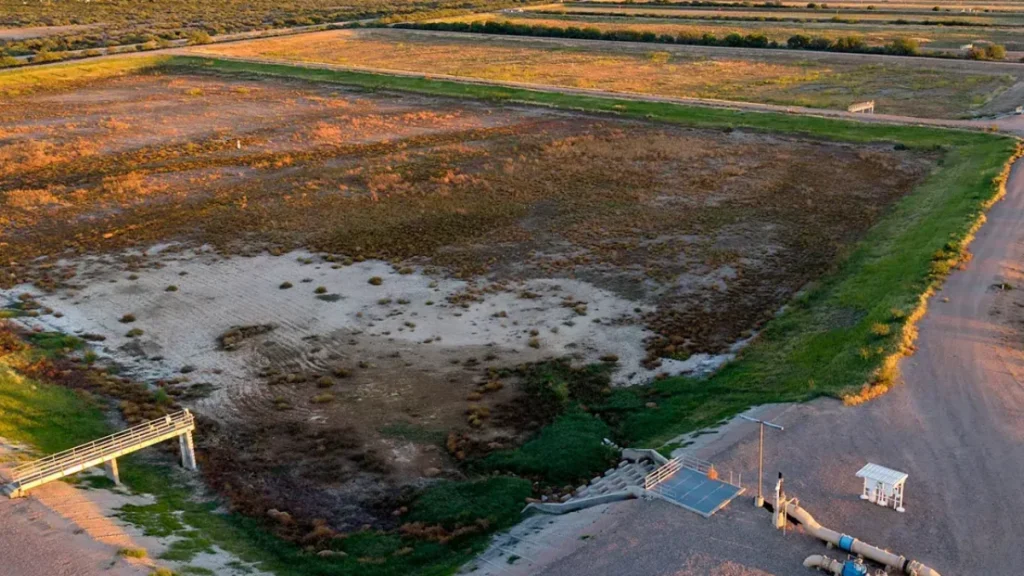
For two decades, Tucson Water has used Colorado River water to fill 20 storage basins west of the Tucson Mountains. The water then seeps into the Avra Valley aquifer below the city, Arizona Luminaria reported. Since the early 2000s, Tucson has pumped its full yearly amount, up to 145,000 acre-feet, into that aquifer.
Most of that water, between 95,000 and 100,000 acre-feet, is normally pumped back out for Tucson Water customers. About 30% stays underground for future use, according to Arizona Luminaria.
Tucson has saved about 600,000 acre-feet of Colorado River water over time, Arizona Luminaria reported. That is enough to meet the city’s needs for more than six years at current use.
John Kmiec, director of Tucson Water, said the city is ready for the cuts because it planned ahead.
“This is what Tucsonans have prepared for for decades and for generations,” Kmiec said, according to Arizona Luminaria. “If we were a community that did not prepare for a change in the Colorado or changing conditions locally, it may be a crisis.”
City sold back some of its river water
Even after the cuts, Tucson Water could have asked for about 120,000 acre-feet of Colorado River water for 2027. It could have stored 20,000 acre-feet of it, Arizona Luminaria reported.
Instead, with Tucson City Council approval, water managers asked for only about 70,000 acre-feet, Arizona Luminaria reported. They sold back roughly 50,000 acre-feet to Lake Mead.
That decision means Tucson will pump about 25,000 acre-feet of water from its underground storage in 2027. That reverses its practice of storing more than it takes out, according to Arizona Luminaria. In exchange, the city will get $86.7 million through a federal program, money Kmiec said will fund water-conservation projects.
Kmiec said using different water sources will matter more as cuts continue. The Arizona Water Banking Authority will credit Tucson for the groundwater it draws in 2027, Arizona Luminaria reported. That means Tucson won’t lose its legal right to the water, but it’s unclear if the credit continues after 2027.
Water groups question the city’s message
Sharon Megdal is director of the University of Arizona’s Water Resources Research Center. She said the aquifer has water for now but warned people not to get too comfortable.
“There’s plenty of water in the aquifer,” Megdal said, according to Arizona Luminaria. “For now.”
Megdal said taking water from the aquifer still uses it up, no matter how officials describe the move. “If you’re drawing upon it, you’re drawing upon it,” she said, Arizona Luminaria reported.
Catlow Shipek is senior program director with the Watershed Management Group, a Tucson nonprofit that promotes water conservation. He said he is concerned about how Tucson Water is talking about the situation.
“I think what you’re already hearing from Tucson Water is, ‘We’ve got everything covered. No need to be concerned,'” Shipek said, according to Arizona Luminaria.
Shipek said he does not think Tucson residents should panic, but said the city’s message should be more careful. He wants Tucson to expand rainwater harvesting and reclaimed water use, Arizona Luminaria reported.
Other Arizona cities face bigger cuts
Tucson is in better shape than some other Arizona communities, researchers and water groups told Arizona Luminaria. Cave Creek relies on the Colorado River for about 95% of its water. The city cannot access groundwater under it, so officials are asking other communities to pump groundwater and send it over.
Phoenix also draws water from the Salt and Verde rivers, Arizona Luminaria reported. The city may tap groundwater used for more than a decade and plans an extra fee for heavy water users. Tucson’s water rates, by contrast, have been set on a tiered basis by use for 50 years.
Megdal said protecting Tucson’s aquifer long term will require using less water and recycling more. “If you use it now, it’s not there for the future,” she said, according to Arizona Luminaria.